

Key takeaways
- Tightening your target audience in the headline kills ambiguity immediately.
- Moving trust signals directly under the main CTA increases user confidence.
- Reducing hero complexity captures attention before the scroll.
- Clear product snapshots translate promise into immediate visual understanding.
Before and After
Click either image to open the full version.
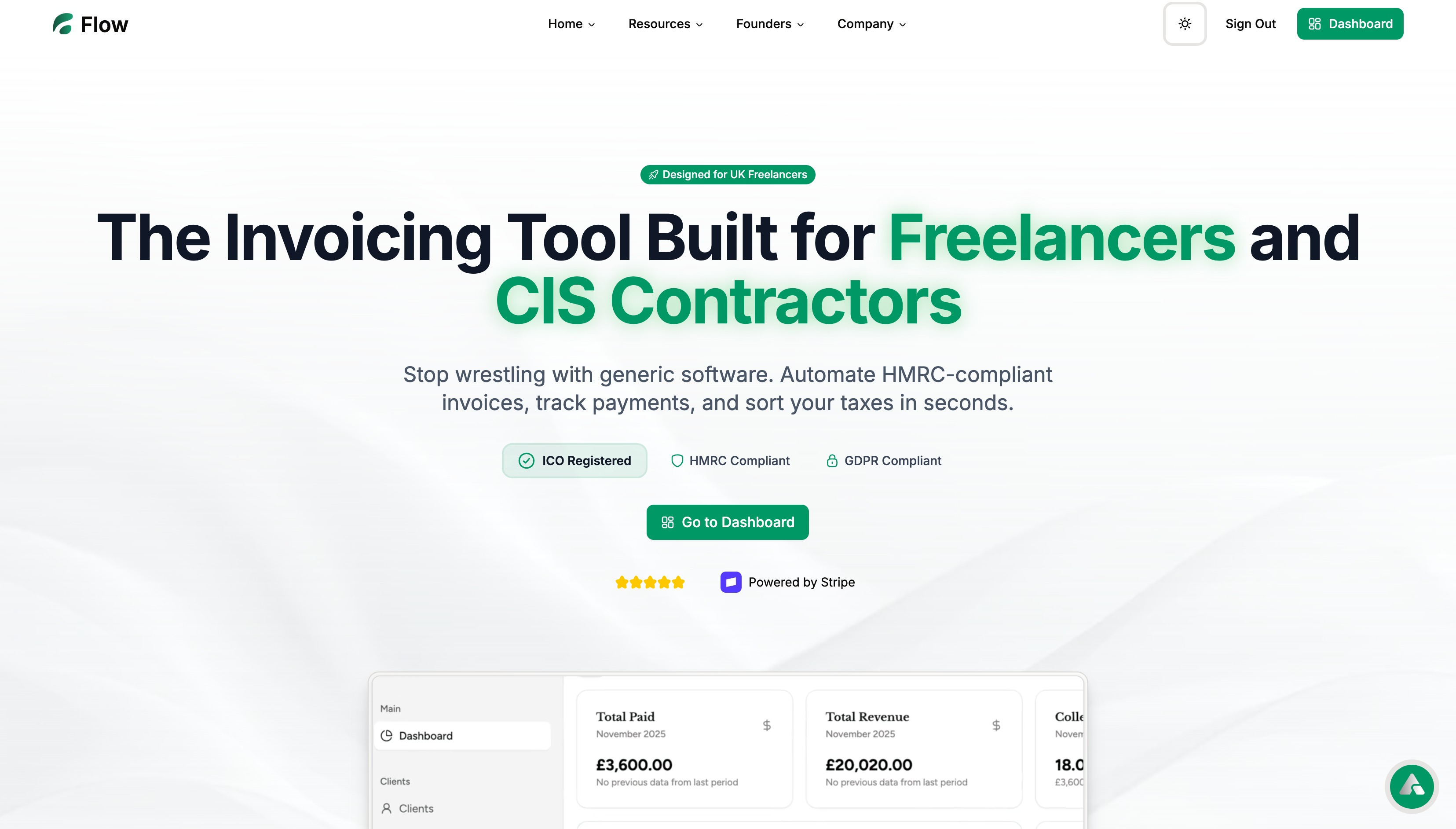
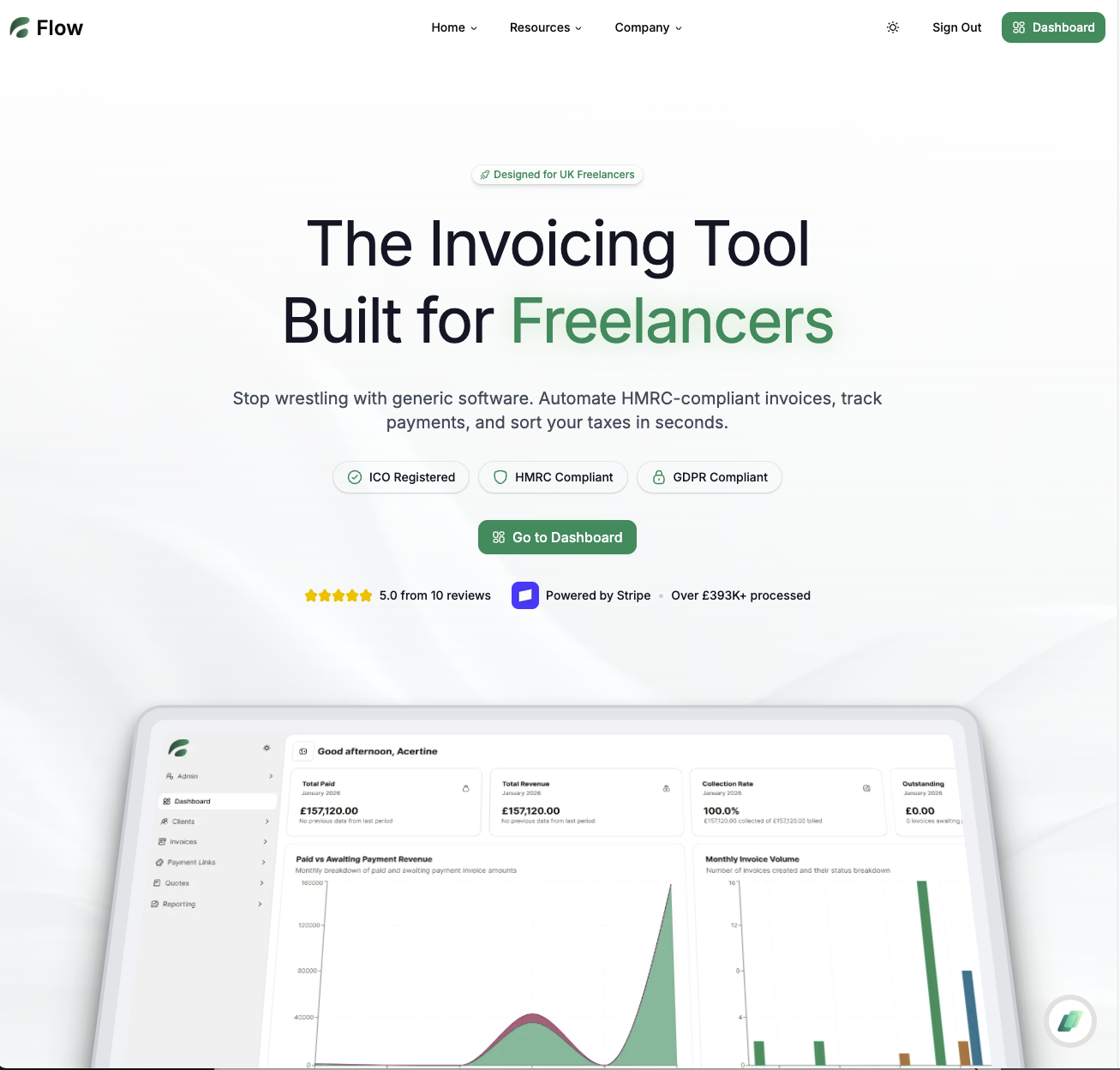
Observed result: signup rate 1.5x
Why it likely worked: The page converted better because it narrowed the audience, shortened the promise, and moved trust closer to the main action.
Before state
The previous Flow homepage suffered from a classic identity crisis. The headline attempted to cater to both Freelancers and CIS Contractors, creating two paths for the visitor to mentally navigate. This is where conversion breaks; the visitor hits the page and has to spend three seconds decoding whether the product actually applies to them. Broad messaging meant the hero felt cluttered, leading to slower first-screen comprehension and higher bounce rates.
Why people moved: Visitors could not immediately anchor their specific use case to the product, so they left instead of digging deeper.
Copy example
Before: The Invoicing Tool Built for Freelancers and CIS Contractors
After: The Invoicing Tool Built for Freelancers
After state
By shifting to an audience-specific headline for Freelancers, the cognitive load dropped significantly. We stripped away themenu complexity, allowing the user to focus entirely on the core promise. The trust row, featuring Stripe integration and compliance badges, was moved into a tighter, cleaner sequence immediately beneath the primary CTA. This ensures that the moment a user feels the urge to click, they are met with the proof required to validate that decision.
Action step: Audit your hero section for dual audiences and ask if you are forcing the user to self-select before they have even seen your value proposition.
What changed
We narrowed the target audience in the headline, which eliminated the friction of too many possible interpretations. The hero section was completely redesigned to be shorter, forcing the visitor to scan only the most critical information. The product dashboard image was updated to better align with the specific workflow of a freelancer, acting as a visual confirmation of the headline’s promise. These changes helped achieve a signup rate 1.5x higher than the previous iteration.
Copy example
Before: broader accounting message
After: clearer single-audience positioning
Action step: Shrink your hero text to a single, bold promise and align your product visual exactly to that promise, not a generic screenshot.
Why it worked
This approach works for SaaS founders who have a strong product but are losing people in the first five seconds. By removing the second persona from the hero, we stopped the visitor from asking, “Is this for me?” The addition of a 5.0 review signal and processed volume proof creates a “safety in numbers” effect that is essential for financial products. When you place these trust elements closer to the button, you are removing the last layer of doubt before the sign-up process begins.
Action step: If you struggle with conversions, use LandingBoost to isolate your hero variables and test audience clarity vs. broad reach.
Leaderboard proof
The final page design relies on visible proof elements that signal maturity to the user. We moved from generic brand signals to specific, high-intent triggers: a 5.0 rating, official Stripe support badges, and verifiable volume proof.
See the full before and after breakdown for Flow
See all SaaS landing page examples
These assets, combined with the tightened layout, directly contributed to the recorded signup rate 1.5x jump. The data confirms that when trust is placed precisely at the point of action, drop-off rates on the landing page decline.
FAQ
Does narrowing my audience hurt my lead volume? No, it actually increases lead quality by filtering out non-fits early. When you speak to everyone, you end up speaking to no one with enough impact to convert. By narrowing your focus, the people who actually need your tool will recognize it instantly.