

Key takeaways
- Narrowing your target audience often expands your conversion potential.
- Visual density in the hero section creates immediate cognitive friction.
- Trust signals must be physically tethered to the action point.
- Clear product context is more effective than generic promises.
- SaaS founders often lose prospects by trying to speak to everyone.
Before and After
Click either image to open the full version.
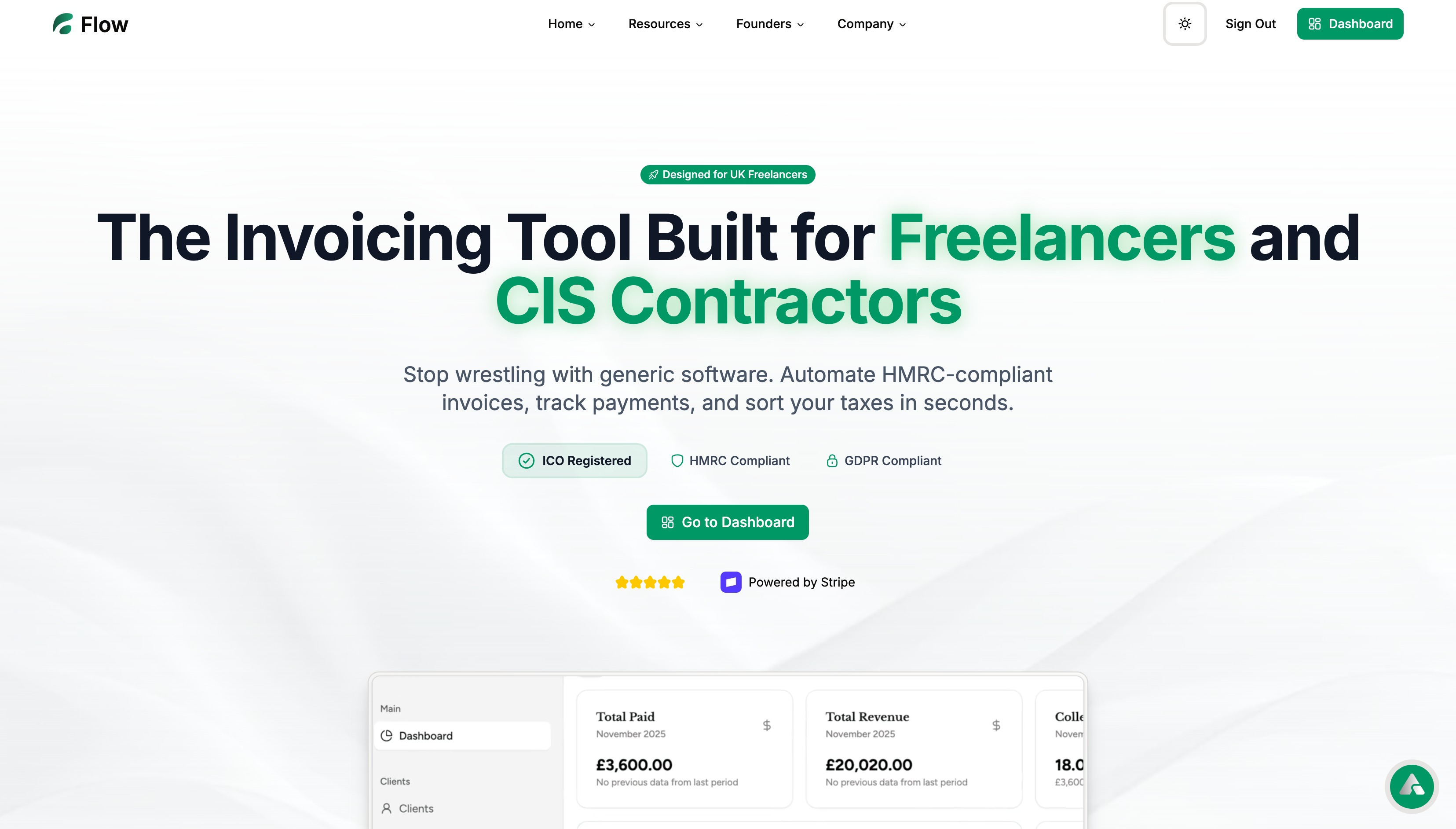
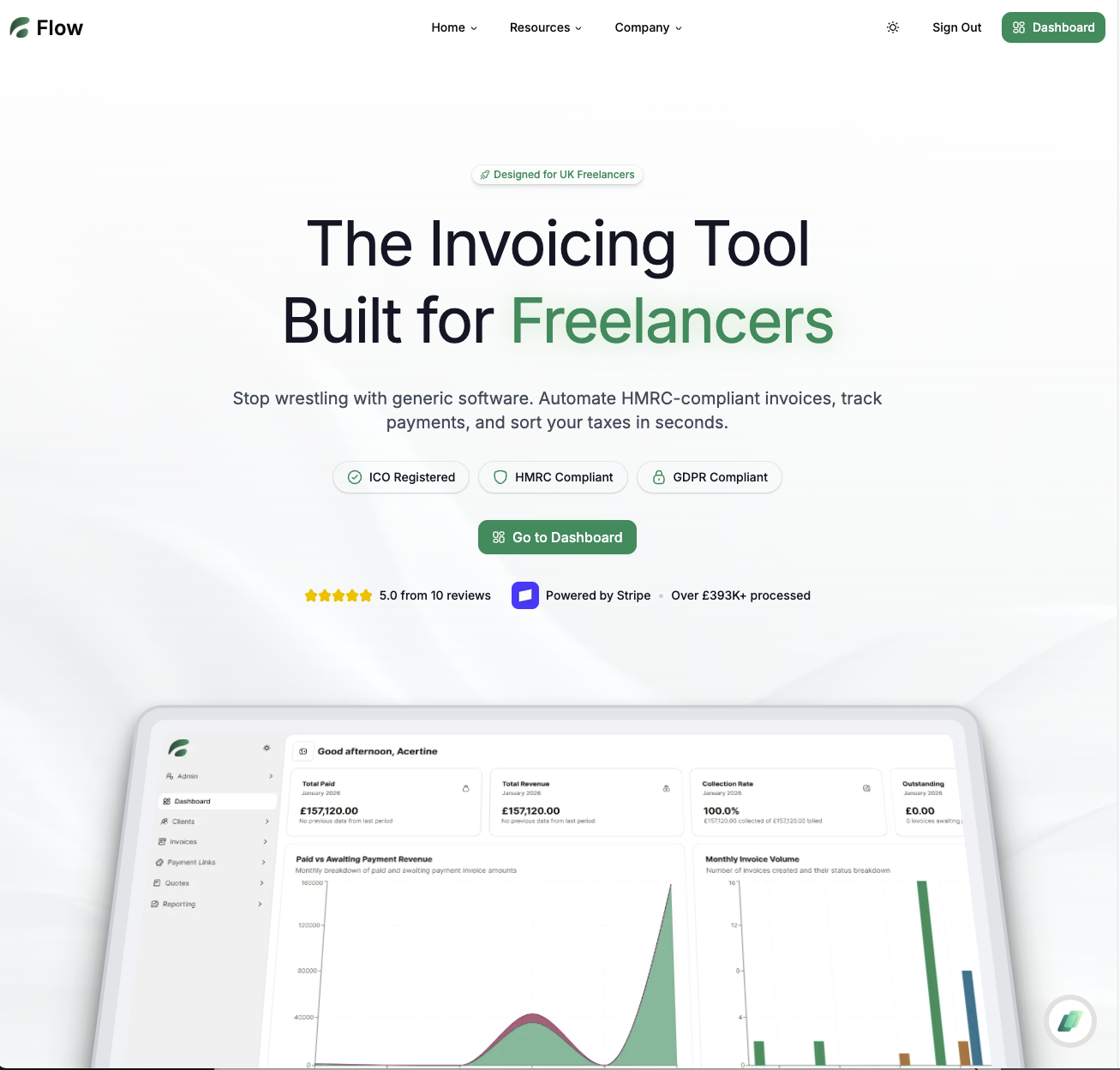
Observed result: signup rate 1.5x
Why it likely worked: The page converted better because it narrowed the audience, shortened the promise, and moved trust closer to the main action.
Before state
The Flow landing page suffered from identity dilution. The headline attempted to appeal to both Freelancers and CIS Contractors simultaneously, which forced a split decision on the visitor the moment the page loaded. Why people moved: Visitors could not instantly decide if the tool was built specifically for their unique tax and invoicing workflow. By trying to serve two distinct buyer personas, the header introduced broad messaging and too many possible interpretations, this is where conversion breaks for most early-stage projects. The layout felt cluttered, with a hero section that had too much menu complexity and a confusing array of cognitive branches that distracted from the primary goal.
Copy example
Before: The Invoicing Tool Built for Freelancers and CIS Contractors
After: The Invoicing Tool Built for Freelancers
After state
Post-optimization, the site underwent a dramatic simplification. The hero became a surgical strike: it targeted Freelancers exclusively. By removing the CIS contractor messaging, the team shortened the core promise and made the value prop immediate. The product dashboard image was redesigned to clearly align with this single-audience promise, ensuring the visitor recognized their specific professional life inside the UI. This is ideal for SaaS founders with a strong product but a homepage that still feels broad or slightly generic. Action step: Strip your headline of all “and” and “plus” qualifiers to isolate your highest value segment.
What changed
The biggest shift was the physical relocation of trust. Rather than leaving social proof scattered, the team created a tighter, cleaner sequence near the CTA button. They utilized 5.0 review signals, Stripe integration badges, and visible compliance markers to anchor the user’s intent. By narrowing the headline, they removed the slower first-screen comprehension hurdles that hindered the original design. Action step: Audit your hero section for elements that do not move a user toward the first “aha” moment; if it doesn’t contribute to the signup, cut it.
Why it worked
Human brains favor specificity. By choosing a single persona, the SaaS founder signaled competence. A prospect who feels “this is exactly for me” is significantly more likely to trust the Stripe integration and professional compliance badges. The reduction in header complexity allowed the eyes to flow naturally from the headline to the product screenshot and finally to the CTA. Copy example
Before: broader accounting message
After: clearer single-audience positioning
Leaderboard proof
The shift to a focused messaging strategy was the primary catalyst for the growth in signup rate 1.5x. Proof shown—including the 5.0 review signal and processed volume evidence—now serves as a reassurance for a clearly identified user, rather than a generic claim aimed at a crowd. When your layout is as polished as the one provided by LandingBoost, it allows the social proof to actually do the heavy lifting of closing the deal. Action step: Group your trust signals within a 200-pixel radius of your primary CTA button.
See the full before and after breakdown for Flow
See all SaaS landing page examples
FAQ
Can a narrow audience hurt your growth? Not in the conversion phase. While you may have a smaller top-of-funnel reach, the final result—a signup rate 1.5x higher—offsets the volume loss by increasing the efficiency of every dollar you drive to the page. It is better to convert 100% of a smaller group than 5% of a massive, uninterested crowd.